
Family-owned · Woodstock Local
Gas Line Installation and Repair
Safe, licensed gas line work for homeowners adding appliances, upgrading to natural gas, or dealing with a suspected leak.
Free estimate
Tell us what you need
Three fields. It reaches a person here, not a call centre.
How to Connect to Gas Safely
Gas line work is not a gray area. Either it's done by a licensed plumber who knows the code, or it's a liability sitting behind your drywall. If you're trying to connect to gas for a new range, a tankless water heater, a whole-house generator, or an outdoor grill line, Coleman Plumbing handles the full run: pressure testing, proper fittings, code-compliant burial depth, and final inspection. Call (678) 322-9059 before you schedule the appliance delivery.
What drives the cost of a gas line job is mostly scope and distance. A short stub-out for a kitchen range is a different day's work than running a new line from the meter to a detached garage or adding a dedicated line for a whole-house generator. Material choice matters too: CSST (corrugated stainless steel tubing) is flexible and fast to route through finished walls, while black iron is the standard for exposed runs and high-heat applications. Access is the other variable. Finished walls, concrete slabs, and crawl spaces all change the labor equation. Every job is different. Contact Coleman Plumbing for an accurate estimate.
Work We Do on Gas Lines
From a single appliance hookup to a full new service line, these are the jobs we take.
Natural Gas Connection
Converting from propane or electric? We run new service lines and connect to the existing gas supply, pulling permits where required and testing the full system before we leave.
CSST Gas Line Installation
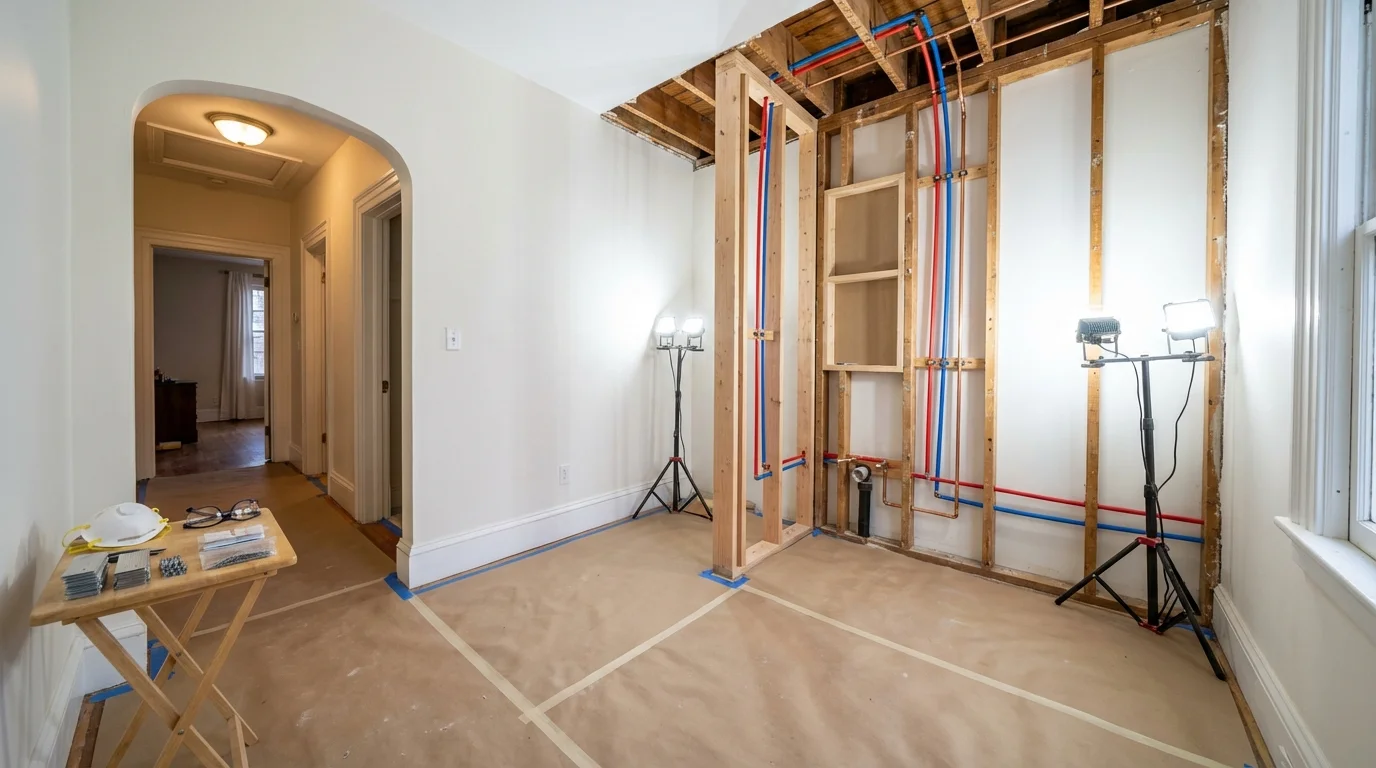
Corrugated stainless steel tubing is the right choice for most residential retrofits. It routes through finished spaces without major demolition. We bond it per Georgia code.
Appliance Gas Line Hookup
Ranges, dryers, water heaters, fireplaces, outdoor grills. If it burns gas, we connect it correctly. That means the right fitting, the right flex connector length, and a pressure test before you light the first burner.
Gas Leak Detection and Repair
If you smell rotten eggs or your bill spiked without explanation, don't wait. We locate the leak, make the repair, and pressure-test the line. This is not a job to defer.
Generator and Outdoor Line Runs
Whole-house generators and outdoor kitchens need dedicated high-volume lines. We size the pipe correctly for the BTU load, route it safely, and bury it at the code-required depth.
Gas Line Inspection and Pressure Testing
Buying a home or renovating? We test the existing gas system, identify any degraded fittings or undersized runs, and document what needs attention before it becomes an emergency.
How It Works
What a Gas Line Install Actually Looks Like
Site Assessment
We trace the existing gas supply, confirm meter capacity, and map the route to your new appliance or stub-out. Nothing gets quoted until we see what we're working with.
Installation and Pressure Test
We run the line, make all connections, and pressure-test the entire system before touching the appliance. If anything holds pressure improperly, we find it here, not later.
Final Inspection and Signoff
Permitted jobs get a county inspection. We coordinate that and stay until it's signed off. You don't have to manage a building department you've never dealt with.
Gas Line Safety
What You Shouldn't DIY on a Gas System
Signs Your Gas Line Needs Attention Now
- 01
Rotten Egg Smell
Natural gas has mercaptan added specifically so you can smell a leak. If you catch that odor indoors, leave the house, don't flip any switches, and call your gas utility first, then us.
- 02
Dead Vegetation Above a Buried Line
A streak of dead grass over your gas line's path in otherwise healthy lawn is a classic sign of a slow underground leak. Don't ignore it.
- 03
Higher-Than-Normal Gas Bill
A sudden increase in your gas usage without a change in habits or weather patterns usually means gas is going somewhere it shouldn't.
- 04
Hissing Near an Appliance or Fitting
An audible hiss near a flex connector, shutoff valve, or appliance hookup means the connection isn't sealed. Shut off the appliance and call. Don't use tape or pipe dope to mask it.
Gas Line Work Across Cherokee County
Coleman Plumbing runs gas lines for homeowners throughout Cherokee County and the surrounding area, including new construction, renovations, and appliance upgrades. If you're in any of these locations, we can get there.
Gas Line Questions We Get Every Week
Do plumbers install gas lines, or does that require an HVAC contractor?
How deep does a residential gas line have to be buried in Georgia?
How much does it cost to run a new gas line to an appliance?
What is CSST and should I be worried about older CSST in my home?
Can I convert my home from propane to natural gas if the street has a main?
What happens if my gas line doesn't pass pressure testing?
Ready to Connect to Gas? Call Coleman Plumbing.
Gas line work is one area where the license and the pressure test aren't paperwork. They're the proof the job is safe.